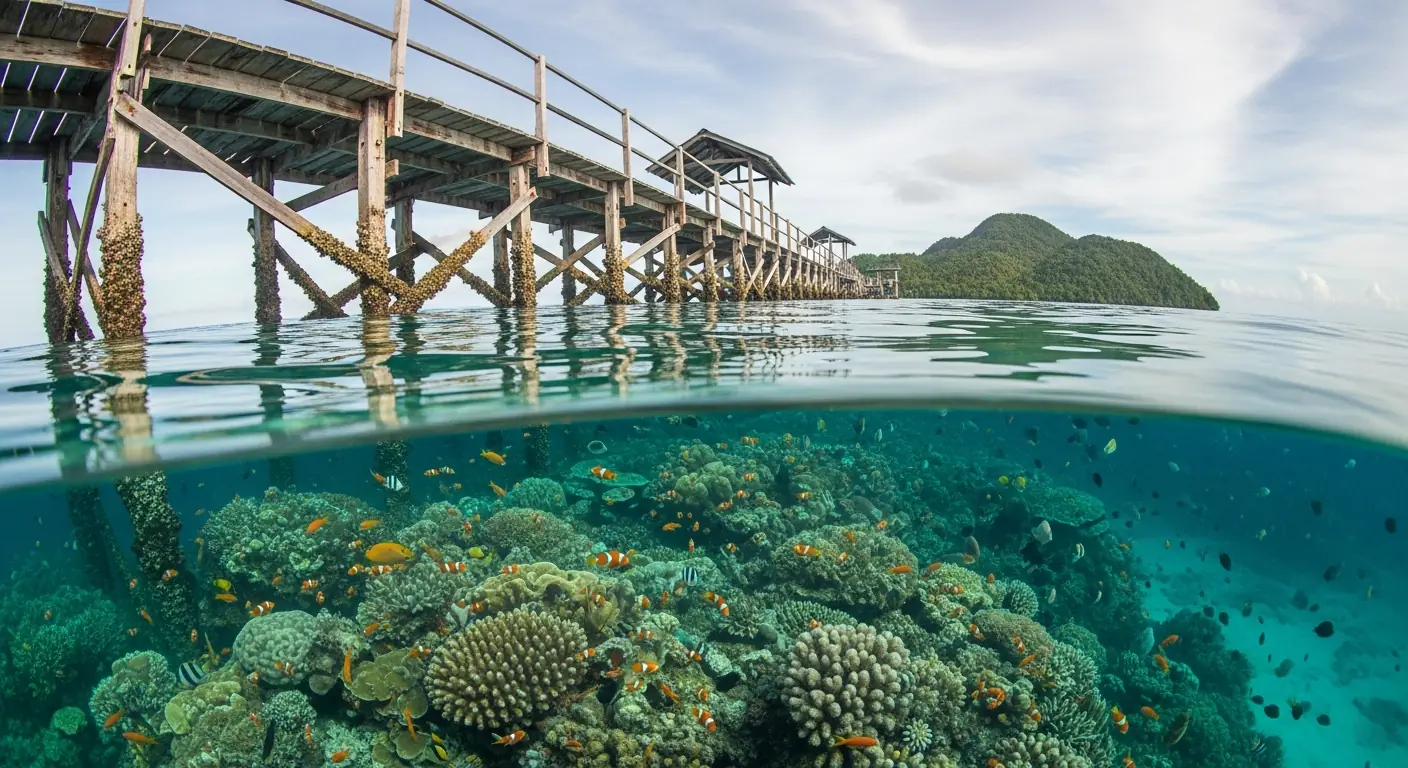
The rhythmic surge of the Dampier Strait pulls against the pilings of the Yenbuba Jetty, a structure that defines a significant entry point into Raja Ampat’s underwater world. Below the weathered planks, a dynamic reef system thrives, a convergence point for marine currents and an accessible dive and snorkel location. This eastern edge of Mansuar Island presents a microcosm of the region’s broader ecological significance, drawing divers and snorkellers to its vibrant coral gardens.
The Yenbuba Jetty: A Gateway to Raja Ampat’s Marine Life
The Yenbuba Jetty stands as a prominent feature off the east side of Mansuar Island, anchoring a dive and snorkel site renowned for its accessibility and biodiversity. The site itself is defined by a sloping reef that descends from approximately 4 meters, gradually extending to depths of about 30 meters. This gradient provides varied habitats, supporting a wide spectrum of marine life, from shallow-water reef fish to deeper pelagic species. Water temperature at Yenbuba Jetty is consistently around 29 degrees Celsius, a factor contributing to the health and proliferation of its coral ecosystems. Divers understanding these depths will observe intricate hard and soft coral formations, often teeming with schooling fish. The jetty structure itself acts as an artificial reef, attracting juveniles and providing shelter. The strategic location within the Dampier Strait ensures a constant flow of nutrient-rich water, sustaining the high biomass characteristic of this region of Raja Ampat. Snorkellers can explore the shallower sections, observing a similar array of reef inhabitants in the sunlit waters.
Currents and Coral Health in the Dampier Strait
The Dampier Strait is a critical artery for marine biodiversity in Raja Ampat, and the Yenbuba Jetty site directly benefits from its dynamic currents. These currents, often moderate to strong, transport plankton and nutrients, fueling the extensive coral growth and supporting large aggregations of fish. The sloping reef structure at Yenbuba Jetty provides a natural current break in certain areas, allowing for more sheltered observation, while other sections expose divers to the full force of the strait’s flow. This constant water movement contributes significantly to the clarity and health of the coral reef ecosystem, preventing stagnation and distributing larvae. Species such as pygmy seahorses, wobbegong sharks, and various nudibranchs are frequently sighted, proof of the rich environment. The presence of these currents necessitates careful dive planning, particularly for those exploring the deeper sections of the reef beyond 20 meters. Understanding the tidal patterns of the Dampier Strait enhances the diving experience, allowing for optimal encounters with feeding fish and pelagic visitors.
Homestay Travel and Local Access from Waisai
Accessing Yenbuba and Mansuar Island typically involves travel from Waisai, the capital of West Papua. Numerous homestays operate across the islands, providing a direct connection to local communities and an authentic experience of Raja Ampat. Yenbuba Homestay, located at Jl. Kri, Kampung Yenbuba, Distrik Meosmansuar, Pulau Kri, Raja Ampat, Waisai, West Papua 98472, Indonesia, serves as a central point for many visitors. This homestay model integrates tourism with local livelihoods, offering accommodations that range from basic to moderately comfortable, emphasizing sustainability and community interaction. Travellers often arrange transfers from Waisai directly to their chosen homestay, with boat being the primary mode of transport. The journey itself provides panoramic views of the karst islands and turquoise waters characteristic of the archipelago. Homestay operators frequently assist with arranging local excursions, including snorkeling trips to nearby reefs or visits to other islands within the Dampier Strait. This direct community engagement is a cornerstone of the Raja Ampat travel experience, fostering cultural exchange.
Yenbuba Homestay and Dive Operations
Yenbuba Homestay not only provides lodging but also facilitates direct access to the marine environment. The homestay operates an on-site dive center, providing equipment and guided excursions. This center is led by an SSI-certified divemaster named Roki, ensuring professional guidance for both certified divers and those seeking introductory experiences. The availability of an on-site dive center streamlines logistics for guests, allowing for immediate access to dive sites like the Yenbuba Jetty. However, it is important to note that Yenbuba Homestay observes a no-diving policy on Sundays, a practice that reflects local customs and allows staff and guests a day of rest. This policy is communicated clearly to guests upon booking and arrival. The dive center’s focus extends beyond the Yenbuba Jetty to include other notable sites within the Dampier Strait, offering a comprehensive exploration of the region’s underwater diversity. Equipment rental is available, and guided dives are tailored to different skill levels, from beginner to advanced.
Snorkeling Opportunities and Underwater Photography
The Yenbuba Jetty site offers exceptional snorkeling opportunities, particularly in its shallower sections (4-10 meters). The clear, warm waters, typically around 29 degrees Celsius, provide excellent visibility for observing the vibrant coral gardens and diverse fish populations. Snorkellers can directly access the reef from the jetty, encountering parrotfish, angelfish, and schools of fusiliers almost immediately. The sloping reef structure ensures that a significant portion of the ecosystem is visible even from the surface. This accessibility makes Yenbuba a prime location for underwater photographers, regardless of their diving certification. Wide-angle photography thrives in the well-lit shallows, capturing expansive coral formations and schooling fish. Macro photographers will find subjects among the intricate coral polyps, nudibranchs, and smaller reef inhabitants. The constant presence of marine life under the jetty itself, often seeking shelter or feeding, provides reliable photographic subjects. The relatively calm conditions near the jetty, especially during slack tide, create ideal conditions for extended snorkel sessions and photography work without strong currents.
Conservation and Sustainable Tourism in Raja Ampat
Raja Ampat is globally recognized as a critical marine biodiversity hotspot, and the conservation efforts here are paramount. The operation of homestays and dive centers, such as Yenbuba Homestay and its associated dive center, inherently ties into the broader goals of sustainable tourism. Visitors contribute directly to the local economy through their stays and activities, providing an economic incentive for communities to protect their marine resources. The management of dive sites, including the Yenbuba Jetty, often involves local communities in monitoring and enforcement, ensuring minimal impact from tourism activities. Dive operators frequently educate guests on responsible diving practices, such as maintaining buoyancy control and avoiding contact with corals. The no-diving policy on Sundays observed by Yenbuba Homestay is an example of a localized initiative that supports sustainable practices, allowing the marine environment a period of reduced human activity. The preservation of the coral reef ecosystems, particularly those within the Dampier Strait, is vital for maintaining the region’s ecological integrity and its appeal as a premier diving destination. The ongoing scientific research and monitoring efforts, often supported by tourism, contribute to a deeper understanding of these complex ecosystems.
Mansuar Island’s Ecological Significance
Mansuar Island, situated within the Dampier Strait, holds significant ecological importance beyond the Yenbuba Jetty site. Its position in this nutrient-rich strait means its surrounding reefs are exceptionally biodiverse. The island itself, along with neighboring Kri and Gam, forms part of a critical habitat for various terrestrial and marine species. The waters off Mansuar Island are known for their strong currents, which, while challenging for some divers, are responsible for the incredible abundance of marine life. These currents bring in pelagic species, including reef sharks, manta rays, and various tuna species, making encounters common. The island’s proximity to other dive sites in the Dampier Strait allows for varied dive itineraries, offering access to different reef structures and marine communities. The sloping reef at Yenbuba Jetty, descending from 4 meters to 30 meters, is a direct reflection of Mansuar’s diverse underwater topography. The health of the coral reefs around Mansuar is a key indicator of the overall ecological health of Raja Ampat.
Yenbuba provides a direct interface with the unparalleled marine biodiversity of Raja Ampat, offering accessible diving and snorkeling, supported by community-based tourism. Explore the intricacies of this vibrant ecosystem and plan your journey to the Dampier Strait by visiting the Yenbuba homepage.